
EFT for Chronic Pain and Illness
Feb 17, 2026
How Tapping on Your Body Can Transform What’s Happening Inside It
EFT for chronic pain works by calming the nervous system and helping the brain update threat patterns that keep pain active.
In This Post, You’ll Learn:”
- What is EFT or "Tapping"
-
Why chronic pain can persist without visible injury
-
How the nervous system maintains pain patterns
-
What research says about EFT
-
How tapping may update emotional memory
-
What to expect if you try EFT
By Andrea Quintal Portas | EFT and Plasmatic Therapy Practitioner
The alarm goes off and your body already knows. Before your feet even touch the floor, the stiffness is there — in your back, your joints, your shoulders. You take a breath and brace yourself for the effort of simply getting up. Another day of dragging through the motions, smiling when people ask how you are, saying “I’m okay” when you’re anything but.
You’ve been to the doctors. You’ve done the scans, the blood tests, the referrals. Maybe they found something and gave it a name — fibromyalgia, arthritis, long COVID, cancer, an autoimmune condition. Maybe they found nothing at all and sent you home with a prescription and a shrug. Either way, the message you received was the same: learn to manage it. This is just how it is now.
So you did. You learned to live with the pain. You adjusted your life around it. You stopped making plans that required energy you didn’t have. You started believing — because your body told you, and your doctors confirmed it — that this was your normal.
But here’s what I need you to hear: it is not OK, and it is not normal. Normal is to live in a harmonious body. Normal is to wake up without dread. Normal is to move through your day without pain dictating every decision. Your body was designed for balance, for vitality, for healing — and somewhere along the way, that capacity didn’t disappear. It got buried.
What conventional medicine often overlooks is that chronic pain is rarely just a physical problem. It lives in the nervous system, in emotional memories stored in the body, in stress hormones that stay elevated long after the original threat has passed, and in beliefs so deeply ingrained we don’t even realise they’re running the show. Conventional approaches often mask and rarely address root causes.
Modern pain science emphasizes that pain is not a direct “damage meter.” Pain is a protective output of the brain and nervous system based on perceived threat and context — and the system can become sensitized over time, so pain persists even when scans look “normal.” This is one reason why approaches that reduce threat and update the nervous system (not just the tissues) can help.
What if there were a way to speak directly to all of those layers — physical, emotional, biochemical, environmental and even spiritual — with a single, simple technique?
There is. It’s called EFT — Emotional Freedom Techniques — and the science behind it is now proving what practitioners and their clients have been experiencing for decades.
What Exactly Is EFT?
Emotional Freedom Techniques (EFT) is a mind-body method that combines acupressure tapping with focused attention on emotional stress. Research suggests it may help regulate the nervous system and reduce chronic pain symptoms.
In a more detailed way, EFT, commonly known as “tapping”, is a psycho-physiological stress reduction technique that combines elements of cognitive therapy with the physical stimulation of specific acupuncture points on the face and body. In the research literature, the standardized protocol is often called Clinical EFT. You use your fingertips to gently tap on these points while focusing on a specific issue — a pain, a memory, a feeling, a belief.
It might sound unusual. It might even look a little strange the first time you see it. But for over the past two decades, research including more than 200 clinical trials, meta-analyses, biomarker investigations, and dismantling studies have documented statistically significant improvements across conditions including PTSD, anxiety, depression, chronic pain, and food cravings. This body of research has been conducted by investigators in over 12 countries.
As Dr. Peta Stapleton, Australian psychologist and world leader in EFT research from Bond University, puts it: EFT is best described as a stress reduction technique — a combination of cognitive and body-based (somatic) methods that produce measurable changes in the body’s physiology and biochemistry.
How Does EFT Help Chronic Pain:
EFT may help chronic pain by:
-
Calming the nervous system
-
Lowering cortisol levels
-
Updating emotional memory responses
-
Reducing perceived threat signals in the brain
What Does Research Say About EFT for Chronic Pain?
Clinical studies suggest that EFT tapping can significantly reduce pain severity, emotional distress, and stress hormone levels in people with chronic pain conditions.
Why EFT Works for Chronic Pain: It Addresses Every Layer
Think of your chronic pain like an iceberg. The physical sensation is the tip — the part you can see and feel. But beneath the surface lies a vast, interconnected web of emotional stress, nervous system dysregulation, limiting beliefs, unprocessed memories, and physiological imbalances that keep feeding the pain.
EFT is one of the few approaches I know that can reach all of those layers simultaneously. Let me walk you through them.
The Emotional Layer: Stress, Anxiety, Depression, Anger, Overwhelm
Chronic pain and stress are deeply intertwined. When you’re in pain, your stress hormones rise. When you’re chronically stressed, your pain sensitivity can increase. Instead of thinking of this as “your pain is all in your head,” it can be more accurate to see chronic pain as a whole-body stress pattern involving the nervous system, immune signalling, sleep, and meaning-making. That’s why approaches that calm the stress response and update emotional learnings can have outsized effects.
Research consistently shows that EFT significantly reduces cortisol — the body’s primary stress hormone. In a landmark study by Church et al. (2012), a single EFT session produced a 24% reduction in salivary cortisol, far exceeding the results from supportive counselling (14%) or no treatment (0.6%). A replication study by Dr. Stapleton’s team found an even larger cortisol reduction of 43% (Stapleton et al., 2020).
When cortisol drops, the entire nervous system begins to shift from sympathetic dominance (fight-or-flight) toward parasympathetic activation (rest-and-repair). This is where healing becomes possible.
Meta-analyses and systematic reviews have found that EFT (in its research form, Clinical EFT) can produce significant improvements in conditions such as anxiety, depression, PTSD and pain-related outcomes. Importantly, dismantling studies suggest the acupoint tapping component contributes to outcomes and they are not due solely to placebo or other non-specific effects of therapy.
The Belief Layer: The Stories That Keep Pain Alive
“Nothing will help me.” “I’ve tried everything.” “This is just how my body is.” “I don’t deserve to feel better.” “I can’t get over it, this pain will not go away.”
If any of these sound familiar, you’re not alone. These beliefs aren’t just thoughts — they’re neural programmes that your brain actively works to maintain, because they’ve become the familiar baseline. As the HeartMath Institute’s research demonstrates, once a pattern becomes established in our neural architecture — even a maladaptive one — the system strives to maintain a match with it, because familiarity equals safety to the brain.
As trauma research also emphasizes, the body can hold on to unresolved stress responses long after the original event has passed — and those stored patterns can influence pain, posture, breath, and nervous system reactivity (van der Kolk, 2014).
EFT works directly with these beliefs. When you tap while acknowledging a limiting belief (“Even though I believe nothing will help me...”), you are simultaneously activating that neural pattern AND sending calming signals to the brain that create what neuroscience calls a “prediction error.” The brain expected distress. Instead, it received calm. This mismatch forces the brain to update the belief — a process called memory reconsolidation.
The result? The old belief loses its emotional charge. It no longer drives your physiology. And a new, more adaptive pattern can take its place. Then, healing begins.
The Habits Layer: Breaking Patterns That Feed Pain
Chronic pain conditions often come with a constellation of protective habits — avoiding movement, tensing muscles, catastrophic thinking, poor sleep patterns, emotional eating, withdrawal from social connection, etc.. These aren’t character flaws. They’re survival strategies your nervous system adopted to cope by building a new identity where it feels safe.
EFT helps interrupt these automatic patterns by directly engaging the body’s stress response system. When you tap while bringing awareness to a habitual pattern, you create an opening — a moment of neural flexibility — where a new choice becomes possible.
The Spiritual and Ancient Wisdom Layer
The acupuncture points used in EFT have been recognised for thousands of years in traditional Chinese medicine and other healing traditions. When I describe EFT, I don’t ask you to “believe” in any particular theory of energy — because today we can also talk about EFT in the language of physiology and neuroscience: we stimulate specific acupoints while engaging the mind through focused attention and self-acceptance.
Some measurements suggest the EFT acupoints have about 4× lower electrical resistance than surrounding skin, and the EFT process appears to send calming signals to the amygdala (a key brain region involved in threat detection).
If you’re curious about emerging anatomy: scientists have been showing a connection between acupuncture meridian maps and the “primo vascular system (PVS)”—a network of microscopic tubules described in some recent research. This is still an evolving hypothesis and is not required for EFT to work.
A 2025 review by David Feinstein, Ph.D., published in Frontiers in Psychology, maps a five-step physiological cascade that explains how acupoint tapping can produce measurable biological and psychological change:
Step 1 — Signal Generation: Physical tapping creates electrochemical signals through a well-established biological process called mechanosensory transduction. Acupoints have a higher density of mechanosensory cells and greater electrical conductivity than surrounding tissue.
Step 2 — Signal Transmission: These signals are thought to travel via peripheral (afferent) nerves and mechanosensitive connective tissue/fascial networks to the brain.
Step 3 — Reaching the Target: The signals arrive at the very brain regions that have been activated by your focused attention on the pain or distressing memory — including the amygdala, hippocampus, and prefrontal cortex.
Step 4 — Brain Regulation: The signals modulate these brain areas — calming overactive stress regions while stimulating areas involved in rational thought and emotional regulation.
Step 5 — Lasting Change: Through memory reconsolidation (“neurological updating”), the brain updates its emotional response to the triggering memory or belief, making the change durable.
 Source: “How Tapping Works” presentation, based on Feinstein, D. (2025). Frontiers in Psychology, Vol 16. ©Innersource 2026.
In other words: you can stay open to ancient wisdom and emerging discoveries — while also grounding your understanding in the growing body of measurable, testable research on the nervous system, stress physiology, and memory reconsolidation.
The Physical and Physiological Layer: What Changes in Your Body
This is where the science gets truly exciting. Beyond what people report feeling, studies have documented measurable shifts in biomarkers, physiology, and brain activity following EFT.
 Source: “How Tapping Works” presentation, based on Feinstein, D. (2025). Frontiers in Psychology, Vol 16. ©Innersource 2026.
Stress hormone reduction: Significant decreases in cortisol, as documented in multiple randomised controlled trials.
Cardiovascular improvements: Lowered blood pressure, improved heart rate, and enhanced heart rate variability — a key marker of nervous system flexibility and resilience.
Immune function enhancement: Increased immunoglobulin A (IgA) and other immune markers, suggesting the body’s defence systems become more effective after tapping.
Changes in gene expression: Preliminary research shows EFT may beneficially influence genes related to immunity, emotional regulation, neuroplasticity, and synaptic connectivity.
Brain activity changes: fMRI studies by Dr. Stapleton’s team have shown measurable changes in brain connectivity patterns in people with chronic pain after EFT treatment, with decreased connectivity between pain-processing regions corresponding to reported pain reduction (Stapleton et al., 2022).
These are measurable changes that have been reported in a growing research base — and the mechanisms are still being actively investigated and refined.
The Healing Power of Positive Emotions
There’s another dimension to this story that I find profoundly beautiful, and it connects deeply with my work in quantum health.
Research from the HeartMath Institute has demonstrated that positive emotions — particularly appreciation, gratitude, care, and compassion — produce a distinct state of physiological coherence in the body. When you experience sincere appreciation, your heart rhythm shifts from an erratic, disordered pattern to a smooth, harmonious, wave-like pattern that reflects increased synchronisation between your nervous system, your heart, your brain, and your hormonal systems.
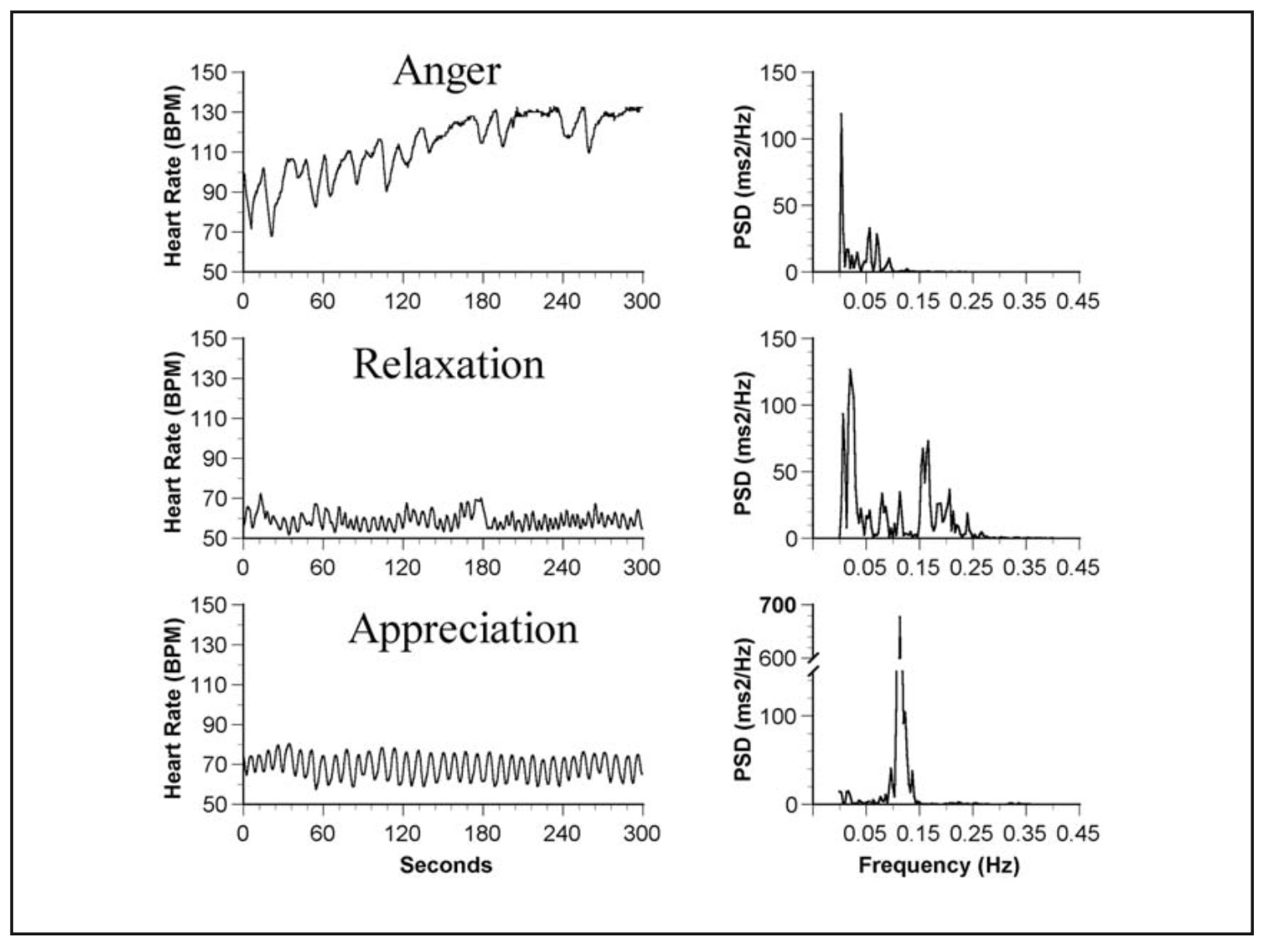 Source: McCraty, R. & Childre, D. “The Appreciative Heart.” HeartMath Research Center, Institute of HeartMath, Publication No. 02-026.
This isn’t just relaxation. It’s something more — a state where the autonomic nervous system shifts toward balance (often reflected in heart rate variability patterns), and the body’s stress response settles. Evidence linking “coherence” to immune markers is still emerging, so I focus on what’s clearest: stress regulation, emotional resilience, and nervous system balance.
Why does this matter for chronic pain? Because when your system is in coherence, your body’s natural regenerative processes are facilitated. The energy that was being consumed by chronic stress and emotional turbulence becomes available for healing.
This idea also echoes a psychoneuroimmunology perspective: emotions are not “just in the mind”—they correlate with biochemical signalling in the body (for example, neuropeptides and their receptors), a theme popularized by Candace Pert’s work (Pert, 1997) and reinforced through recent research cited by Dr. Joe Dispenza and his research team.
And here’s the key insight: EFT naturally generates this state. When you tap while acknowledging your pain and simultaneously choosing self-acceptance and compassion, you’re creating the conditions for physiological coherence. You’re literally shifting your body into a mode where healing can happen more efficiently.
This is the bridge between ancient wisdom and modern science. The traditions that spoke of the heart as the seat of healing, the practices that emphasised gratitude and compassion as medicine — they were pointing to something physiologically real.
From Conventional Exposure to Something Better
One of the most important findings in the research is how EFT compares to conventional therapeutic approaches. Critics have sometimes suggested that EFT’s benefits come simply from the “exposure” element — facing your fears or memories. But the evidence tells a more nuanced story.
Conventional exposure therapy works through a process called habituation — gradually suppressing the old fear response by forming new competing associations. This process can be slow, emotionally taxing, and has relatively high dropout rates. Importantly, the original fear memory remains intact and can resurface under stress.
EFT takes exposure further. By combining the recall of distressing material with the physiological calming signals generated by tapping, EFT facilitates something fundamentally different: depotentiation — actually eliminating the old emotional association at the neurological level, rather than just suppressing it.
The result? Faster treatment, less distress during the process, and more durable outcomes. Studies have shown that tapping-based protocols achieved results for conditions like agoraphobia in 5 sessions compared to 12 for CBT. And in studies comparing EFT to CBT for depression and anxiety, the CBT outcomes were not retained at follow-up, while EFT outcomes were retained and even continued to improve.
 Source: “How Tapping Works” presentation, based on Feinstein, D. (2025). Frontiers in Psychology, Vol 16. ©Innersource 2026.
Your Nervous System Holds the Key
If there is one concept I want you to take away from this post, it’s this: your nervous system is not broken. It’s doing exactly what it was designed to do — protect you. The problem is that it got stuck in protection mode, and it needs a signal that it’s safe to come back to balance.
EFT provides that signal. Every time you tap, you’re communicating directly with your limbic system — the part of the brain responsible for threat detection and emotional processing — in a language it understands: the language of the body. You’re telling it, through measurable electrochemical signals, that right now, in this moment, you are safe.
And when the nervous system believes it’s safe, remarkable things happen. Pain decreases. Inflammation reduces. Sleep improves. The fog lifts. Energy returns.
This is nervous system self-regulation, and it is your birthright.
I want to leave you with something practical — a taste of what this feels like in your body. I prepared a simple EFT exercise you can do now. Try it and let me know what shifts you notice. I read and reply to every email I receive - [email protected].
You can access A Simple EFT Exercise for Chronic Pain - here
You Don’t Have to Stay Stuck
If you’ve been living with chronic pain or illness that conventional treatments haven’t been able to resolve, I want you to know: there is another way. Not a magic cure, but a fast and effective pathway — one that honours your body’s intelligence, works with your nervous system rather than against it, and is backed by a growing body of rigorous scientific evidence.
EFT is a tool you can learn, practise, and use on your own — and when you’re ready to go deeper, working with a trained practitioner can help you reach the root causes that self-tapping alone may not access. We often have a blind spot to our own memories that is hard to reach.
Your body wants to heal. Your nervous system wants to come back to balance. Sometimes it just needs the right signal, the right support.
And that signal might be right at your fingertips.
Thank you for reading this post. I hope you found it informative and practical. If it resonated with you, you may be interested in downloading the free guide: “The 5 Hidden Drivers of Chronic Pain” — and discover what might really be keeping your body stuck. And share it with someone you know may be going through pain or illness. I also talk about the hidden drivers of Chronic Pain in my first blog post, you can read it here.
Download your guide here
Ready to Continue The Healing Journey With EFT?
I am the founder of Harmony Quantum Health Solutions, a chronic pain resolution practice bridging 25+ years of biomedical research expertise with evidence-based quantum healing modalities including EFT and Plasmatic Therapy. She works with clients locally on the Mornington Peninsula and virtually worldwide, in English, Portuguese, and Spanish.
My clients often experience noticeable relief in their very first session—because we're addressing what's actually causing the pain, not just managing symptoms.
If you feel called to explore how EFT can help YOU in your healing journey,
📅 Book a Free 30-Minute Pain Assessment:
No obligation. No pressure. Just a conversation about what might actually help.
Chronic pain rarely has a single cause. If you're exploring deeper healing, these related topics expand on the biological, emotional, and energetic drivers discussed above.
Explore Related Topics in Chronic Pain & Healing
-
Why Chronic Pain Persists (When Nothing Is “Wrong”)
-
5 Hidden Drivers of Chronic Pain (Free Guide)
-
How Emotional Memory Keeps Pain Active
-
What Is Nervous System Regulation?
-
How Trauma Shapes Long-Term Pain Patterns
Related Approaches in Chronic Pain & Healing
-
What Is Plasmatic Therapy? A Quantum Perspective
-
How Structured Water May Influence Cellular Healing
This content is educational only and does not constitute medical advice. Always consult your healthcare provider regarding your medical condition. Results vary by individual.
References and Sources
Feinstein, D. (2025). How tapping works: physiological and psychological mechanisms in EFT. Frontiers in Psychology, 16:1660375. doi: 10.3389/fpsyg.2025.1660375
Butler, D. & Moseley, L. (2013). Explain Pain (2nd ed.). Noigroup Publications.
Moseley, G. L. & Butler, D. S. (2015). Fifteen Years of Explaining Pain: The Past, Present, and Future. The Journal of Pain, 16(9), 807–813. doi: 10.1016/j.jpain.2015.05.005
Stapleton, P. (EvidenceBasedEFT.com). EFT: How to Talk About EFT in a Way Helps People Accept It. (PDF).
Evidence Based EFT. (April 2025). EFT Research Fact Sheet. (PDF).
Stapleton, P., Crighton, G., Sabot, D., & O’Neill, H. M. (2020). Managing PTSD symptoms and trauma with Clinical EFT: A randomized controlled trial. Psychological Trauma: Theory, Research, Practice, and Policy, 12(8), 869–877.
Church, D., Yount, G., & Brooks, A. J. (2012). The effect of emotional freedom techniques on stress biochemistry: A randomized controlled trial. Journal of Nervous and Mental Disease, 200(10), 891–896.
Stapleton, P. B., Baumann, O., O’Keefe, T., & Bhuta, S. (2022). Changing brain connectivity after EFT tapping in chronic pain sufferers. Complementary Therapies in Clinical Practice, 49:101653.
van der Kolk, B. (2014). The Body Keeps the Score. Viking.
Pert, C. (1997). Molecules of Emotion. Scribner.
McCraty, R. & Childre, D. (2002). The Appreciative Heart: The Psychophysiology of Positive Emotions and Optimal Functioning. HeartMath Research Center, Institute of HeartMath, Publication No. 02-026.
Bach, D., Groesbeck, G., Stapleton, P., Sims, R., Blickheuser, K., & Church, D. (2019). Clinical EFT (Emotional Freedom Techniques) improves multiple physiological markers of health. Journal of Evidence-Based Integrative Medicine, 24, 2515690X18823691.
Clond, M. (2016). Emotional Freedom Techniques for anxiety: A systematic review with meta-analysis. Journal of Nervous and Mental Disease, 204(5), 388–395.
Graphic sources: “How Tapping Works” presentation ©Innersource 2026, based on Feinstein (2025).
Stay connected with news and updates!
Join our mailing list to receive the latest news and updates from our team.
Don't worry, your information will not be shared.
We hate SPAM. We will never sell your information, for any reason. By signing up you understand that you may receive daily emails in the first week and then that will be less frequent as new content is released. You can always opt out at any time.